Outdoor Education
Growing Grit: How Outdoor Challenges Build Confidence and Leadership
October 9, 2026
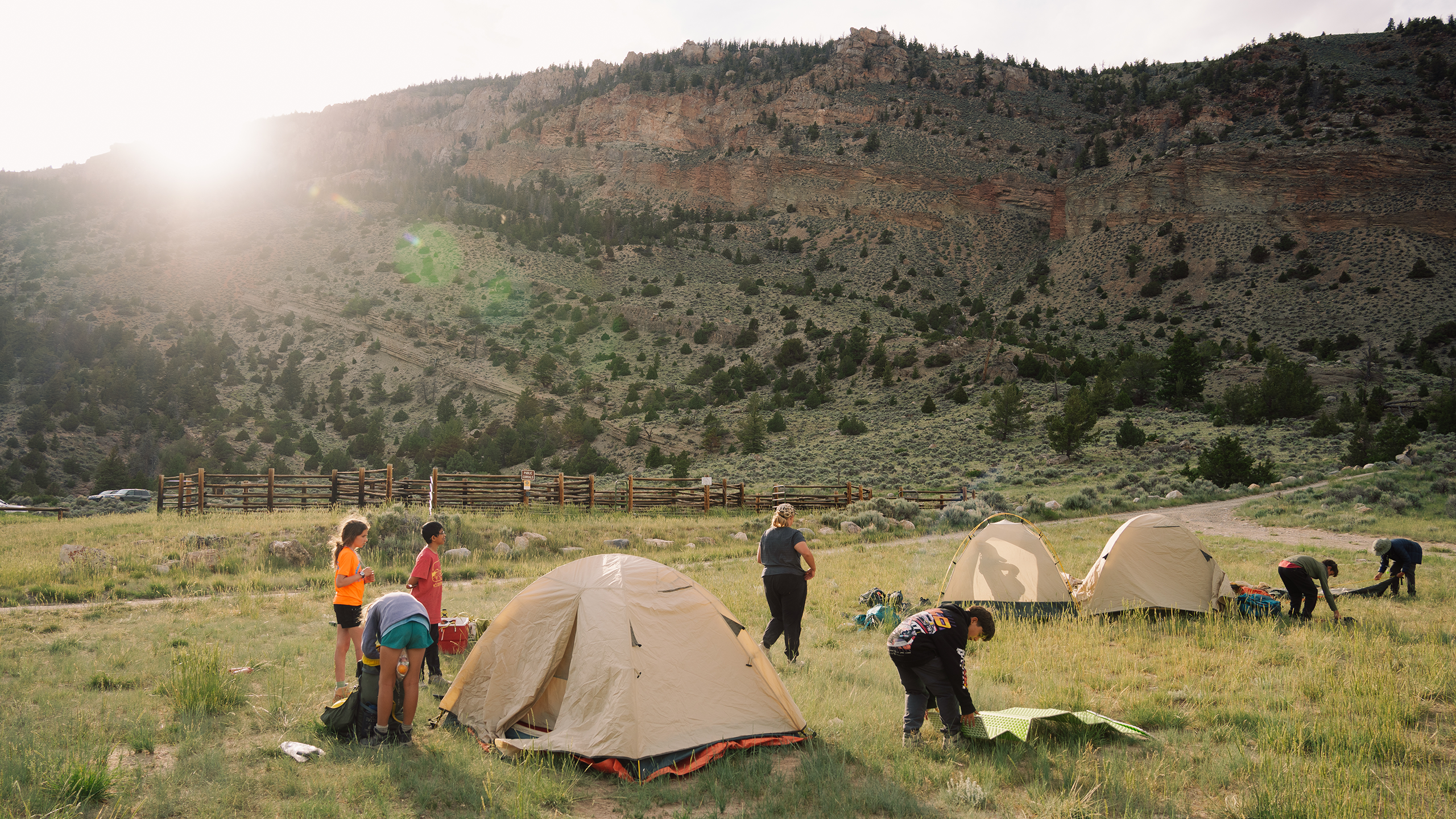
I was 18 years old, five days into a month-long wilderness trip in the Owyhee Canyonlands of Idaho.
I had saved and saved to go on this trip: a month of backpacking and whitewater canoeing in a part of the country I had never seen before. I was one of only two females in a group of ten. And while I had grown up on the coast in Charleston, South Carolina, I had been doing summer backpacking trips since I was 14.
In other words, I thought I knew what I was doing.
Then one morning, one of my leaders pulled me aside.
“Anne, you need to get up earlier. You are always the last one packed, and you are holding up the group.”
Oof.
I can still feel the shame. The humiliation.
And, perhaps most of all, the immediate and overwhelming desire to explain all the reasons he was wrong.
I was doing things! Important things! There were perfectly legitimate reasons I wasn’t ready! He just wasn’t seeing everything I was doing!
Except, of course, he was right. I was holding up the group.
I am sure I had received feedback before that moment in my life. I know I had. But for whatever reason, this piece of feedback mattered in a different way. Maybe because my actions suddenly weren’t just about me. Nine other people were waiting while I stuffed things into my backpack.
I remember hiking that day while my brain spiraled through all the ways I was going to be better. Faster. More organized. More capable.
And eventually, I was. Not the next morning. Not magically. But slowly, over time, I learned how to pack my backpack efficiently. I learned how to organize my gear the night before. I learned to anticipate what needed to happen next.
Eventually, I became the person who was ready first.
And somewhere along the way, I also learned to appreciate the leader who had bruised my 18-year-old ego enough to tell me I could do better.
Years later, I learned there was language for some of what I was developing.
Grit.
Psychologist Angela Duckworth defines grit as “passion and perseverance for long-term goals.” Her research has explored why talent alone doesn’t determine who succeeds and why the ability to keep working toward something difficult matters. Just as importantly, Duckworth argues that grit isn’t simply something you are born with. It can grow.
And I think that last part matters enormously for those of us raising young people today.
How Parents Can Help Kids Develop Grit and Perseverance
As parents, we want our children to be successful. We want them to feel confident. We want them to have teachers who understand them, coaches who appreciate them, friends who include them and experiences that go well.
So we help.
We remind them about their homework. We bring their forgotten water bottles. We email their teacher about their grade. We talk to their coach. We track the bus on our phones and follow them to tournaments across the state.
Most of it comes from love.
But somewhere along the way, we have to ask ourselves an uncomfortable question:
If we remove too many of the small struggles, where do our children practice doing hard things?
Where do they learn to hear, “You need to do better,” feel the sting of it, and discover that they actually can do better?
Where do they experience being tired and still needing to help others?
Where do they discover that their contribution matters to people other than themselves?
Where do they fail at something, try it again and realize they are getting better?
Grit requires friction. Not trauma. Not manufactured suffering. Not adults standing back while children flounder. But challenge. Sometimes our kids need an extra nudge toward the experiences we know will help them grow.
As Duckworth’s work increasingly emphasizes, character doesn’t develop in a vacuum. Young people need environments that both challenge and support them. They need peers, mentors and cultures that expect something from them.
That is exactly where outdoor experiences can be so powerful.
How Outdoor Adventures Help Kids Build Grit
At Wilderness Adventures, we certainly take young people to extraordinary places.
But I don’t think the destination is the most important part.
The magic is in what happens along the way.
It’s getting your sleeping bag back into the stuff sack when everyone else is ready to leave.
It’s carrying a pack uphill when your legs are tired.
It’s learning to paddle on the same side as your canoe partner instead of blaming them for going in circles.
It’s cooking dinner when you’d rather sit down.
It’s discovering that the rain isn’t going to stop just because you’re uncomfortable.
It’s realizing that your attitude affects twelve other people.
It’s receiving feedback from a Trip Leader you respect.
And then waking up tomorrow and trying again.
These moments can look incredibly small from the outside.
Packing a backpack on time certainly does.
But to an 18-year-old Anne in the Owyhee Canyon, it wasn’t small. It was THE THING.
It taught me that I could receive hard feedback without falling apart. That I was capable of changing my behavior. That other people were counting on me. That competence isn’t something we either have or don’t have; it is something we build.
That lesson followed me far beyond Idaho.
How Outdoor Challenges Build Confidence in Teenagers
We sometimes talk about confidence as though it is something we can give children.
I’m not sure we can. We can encourage them. We can believe in them. We can remind them of what they are capable of. But real confidence comes from evidence.
I did something hard.
I struggled.
I got better.
People counted on me, and I showed up.
That’s a very different kind of confidence than simply being told, “You’re amazing.”
And eventually, those small moments begin turning into leadership.
A young person who once needed help packing becomes the person showing someone else how to organize a backpack.
The student who struggled on the first uphill climb becomes the one walking beside another student at the back of the group.
The kid who wasn’t sure they belonged begins making sure somebody else does.
Challenge becomes competence. Competence becomes confidence. And confidence, paired with responsibility for others, becomes leadership.
That progression doesn’t happen because an adult lectures a teenager about perseverance.
It happens because they live it. Again. And again. And again.
Why Kids Need Opportunities to Practice Independence
There is a lot about raising children today that is different from the childhood many of us experienced. Young people are more connected to adults, more scheduled and more easily reachable than perhaps any generation before them. We’ve written before about what we lose when childhood becomes more phone-based and less play-based.
That isn’t inherently bad.
But it does mean that some of the independence and struggle that once happened organically may now need to be created more intentionally.
We have to give young people places where the stakes are real but manageable.
Places where adults are nearby but aren’t solving every problem.
Places where being uncomfortable doesn’t automatically mean something has gone wrong.
Places where their choices affect a community.
Places where someone who cares about them can look them in the eye and say:
You can do better.
And then give them the space to prove it.
Nearly three decades after that morning in Idaho, I couldn’t tell you what time we left camp that day. I couldn’t tell you how many miles we hiked or what we ate for dinner.
But I remember that conversation.
And I remember what happened afterward: I got better.
Maybe that’s one of the greatest gifts we can give young people: not a life without struggle, but enough meaningful struggle that they begin collecting evidence about themselves.
I can figure things out.
I can contribute.
I can take feedback.
I can keep going.
I can get better.
That is grit.
And out there—one backpack, one paddle stroke, one hard conversation, one long uphill climb at a time—we get to watch grit grow.